

Does Your Check-In Process Really Protect Your Club?
Your front desk check-in might be costing you money and exposing liability. Learn how swim clubs use check out and check in systems that work.

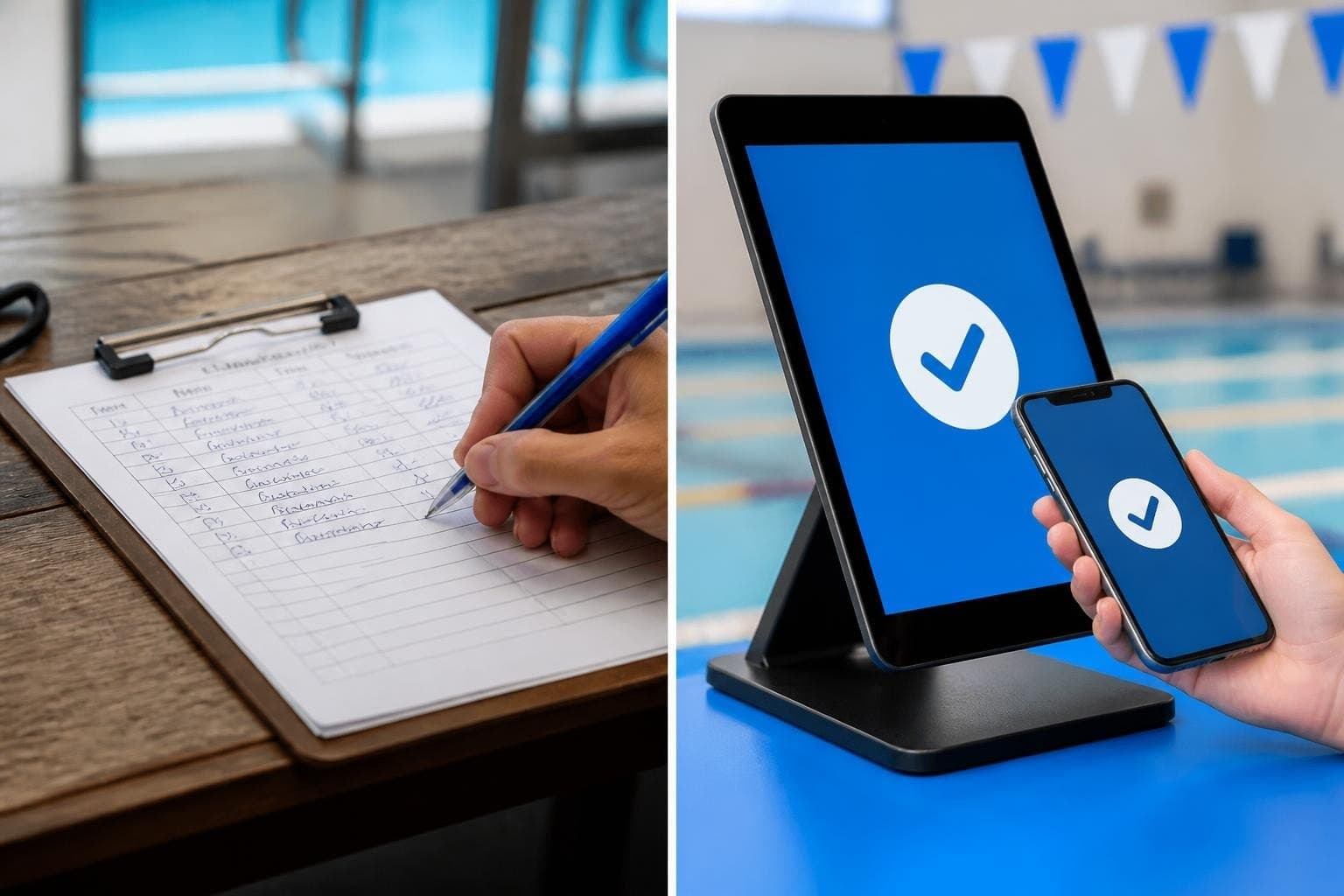
It's Memorial Day weekend and your front desk is slammed. Three families claim they already paid their guest fees, two more swear they made reservations, and someone's four-year-old just ran straight past the desk while you were checking IDs. Your seasonal staff member looks at you, overwhelmed, holding a clipboard with illegible handwriting. This scenario plays out at swim clubs every summer, and it all comes down to how you handle check out and check in. The difference between chaos and control isn't about working harder at the front desk. It's about having systems that actually work when things get busy.
Why Most Clubs Get Check-In Wrong
You've probably inherited a check-in process that made sense twenty years ago. Maybe it's a paper sign-in sheet, or a binder with member photos, or even just a casual wave-through for familiar faces. These methods feel personal and community-focused, which is exactly why they stick around.
But here's what actually happens during peak season:
- Members get frustrated waiting while staff hunt through binders or verify payment status by hand
- Guest fees slip through because there's no automated way to track who paid and who didn't
- Capacity limits become guesswork instead of real-time data you can enforce
- Liability exposure grows when you can't prove who was actually on-site during an incident
The weekend rush doesn't care about good intentions. When fifty families show up between 1:00 and 2:00 PM, your check-in process either handles the load or becomes the bottleneck that ruins everyone's Saturday.
The Hidden Cost of Manual Check-In
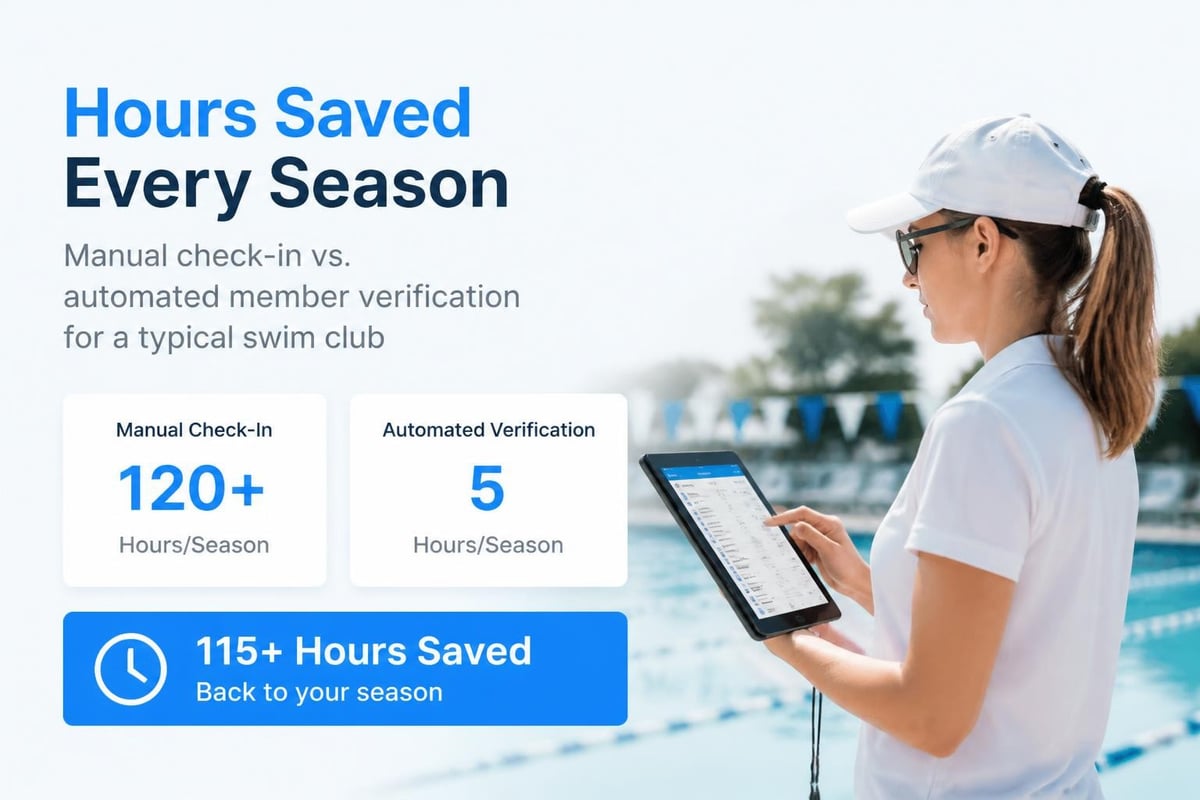
Let's do some quick math. If each manual check-in takes two minutes during busy periods, and you process 200 entries on a Saturday, that's nearly seven hours of staff time. Not seven hours of friendly member interaction or handling real problems. Seven hours of writing names, checking lists, and answering the same payment questions over and over.
Now multiply that across your entire season. The time cost alone should make you rethink how check out and check in works at your facility.
What Actually Makes Check Out and Check In Work
Effective systems share three characteristics: they're fast enough for your busiest days, they capture information you actually need, and they don't require extensive training for seasonal staff. Everything else is just feature bloat.
Speed Matters More Than You Think
Your check-in process should take less than 10 seconds per member during peak times. Any longer and you create lines, which create frustration, which create members who start bypassing the desk entirely. That's how you lose control of your facility.
Modern check-in systems handle this through quick verification methods like member cards, key fobs, or mobile app check-ins. The technology isn't complicated. What matters is that it works reliably when you have fifty families waiting.
Information You Need vs. Information You Collect
Here's a test: look at your current check-in records and ask yourself what you actually do with that information. If you're collecting data you never reference, you're wasting everyone's time.
Essential check-in data includes:
- Member verification and account status
- Guest counts and payment confirmation
- Current facility capacity
- Entry timestamps for liability documentation
Nice-to-have data that often isn't worth the time:
- Detailed guest information for first-time visitors (get this during registration, not at the gate)
- Preferences or feedback during check-in (use surveys instead)
- Extended family relationship details (your membership database should handle this)
The best check out and check in systems capture what matters automatically and skip the rest. Your front desk shouldn't become a data entry station.
The Front Desk Test That Reveals Everything
Try this experiment next weekend. Time how long it takes to check in ten families during your busiest hour. Then answer these questions:
- Could a two-week-old staff member handle the same check-ins without calling for help?
- Can you pull a report right now showing current capacity?
- If someone got injured this afternoon, could you produce a verified list of everyone on-site?
- Did any guest fees or charges get processed incorrectly or missed entirely?
If you answered "no" to any of these, your check-in process has gaps that grow into real problems during busy season. The good news? These are all fixable issues once you know what to look for.
Common Check-In Failures and Quick Fixes
| Problem | What's Really Happening | Solution |
|---|---|---|
| Lines forming during peak hours | Manual verification takes too long | Automated member verification with card/fob scan |
| Guest fee disputes | No clear record of payment | Point-of-sale integration at check-in |
| Capacity confusion | Manual counting is inaccurate | Real-time tracking with automated check out and check in |
| Staff constantly asking for help | Process requires too much judgment | Clear protocols with automated prompts |
Each of these problems compounds during your busiest days. A minor slowdown at check-in becomes a fifteen-minute wait, which becomes unhappy members, which becomes complaints to your board.
Building a System That Handles Real Situations
Let's walk through what happens when you modernize check out and check in. Not the marketing version, the actual operational changes.
Member Check-In: The Happy Path
Sarah pulls into your parking lot on Saturday afternoon with her two kids. She scans her member card at the front desk. The system instantly confirms:
- Her membership is active and paid through September
- She has no outstanding balance
- Her account allows two adult guests (she's not bringing any today)
- Current pool capacity is at 65% (plenty of room)
Total time: 8 seconds. Your staff member smiles, confirms the kids' names, and welcomes them in. No hunting through binders, no payment questions, no capacity calculations.
Guest Check-In: Where Things Usually Break Down
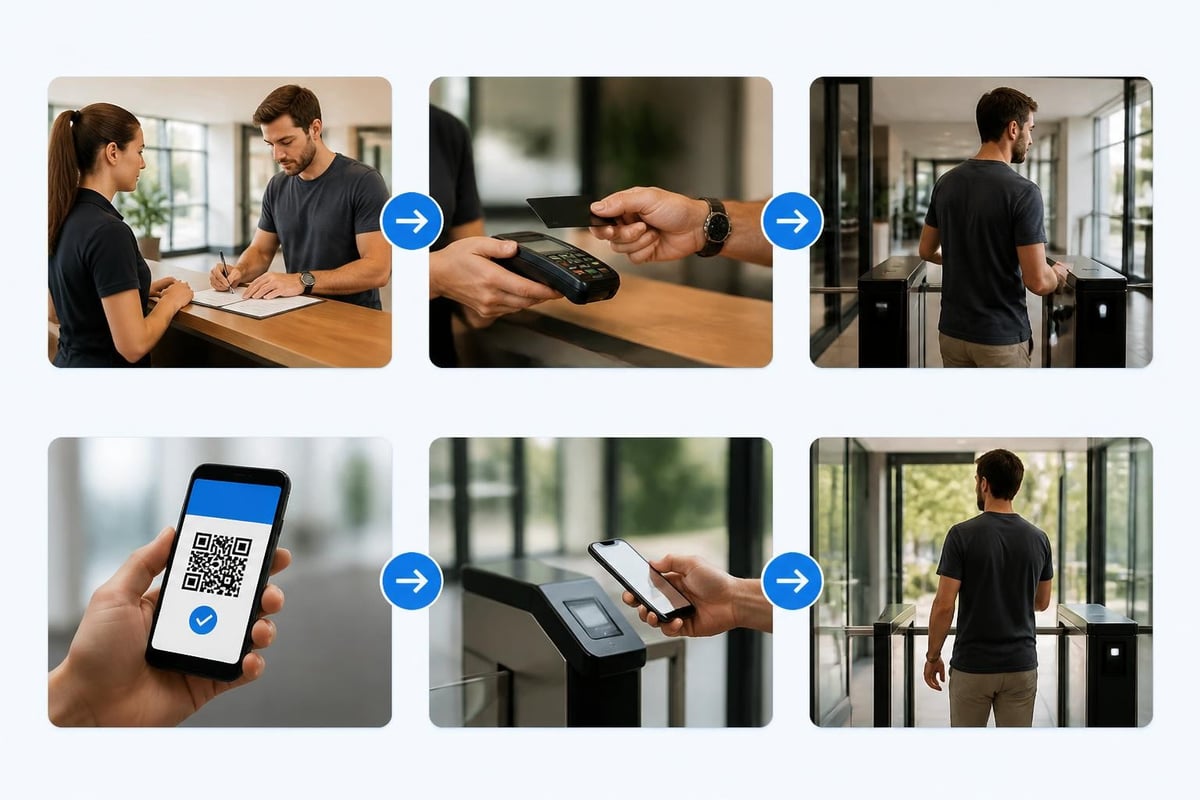
Now Sarah's friend Jennifer shows up with her family as guests. Here's where most clubs struggle. Traditional check out and check in processes require:
- Confirming Jennifer is actually Sarah's guest
- Calculating the guest fee
- Processing payment
- Recording everyone's names
- Updating capacity counts
This takes five to seven minutes with manual systems, especially if payment involves writing checks or making change. With a proper system, the same process takes less than a minute because member guest privileges and fees are already configured in the database.
The Scenarios That Break Bad Systems
You need check-in processes that handle edge cases without staff escalation:
Expired Membership: Member shows up but their renewal payment bounced. Your system flags this immediately with specific next steps (pay today, temporary access, contact treasurer, etc.). Staff doesn't need to remember every delinquent account.
Capacity Limits: Pool reaches maximum occupancy right as someone checks in. Instead of guessing or causing arguments, the system enforces your rules consistently. This protects both safety and liability.
Special Access Hours: Members with young children get first-hour access on weekday mornings. Your check-in system enforces this automatically rather than putting staff in the awkward position of turning away members who "didn't know" about the policy.
Check-Out: The Forgotten Half of the Process
Most clubs obsess over check-in and completely ignore check out and check in as a complete cycle. But knowing when people leave matters almost as much as knowing when they arrive.
Why Check-Out Actually Matters
Accurate check-out tracking solves several problems:
- Real capacity management instead of inflated numbers as people leave
- Equipment accountability if you loan towels, tubes, or other items
- Usage pattern data showing actual visit duration, not just arrival times
- Liability documentation proving someone left before an incident occurred
The challenge is getting members to actually check out. Unlike hotels or gyms with turnstiles, outdoor pools have multiple exit points and members who just leave when they're ready.
Making Check-Out Work Without Friction
Some facilities use proximity-based check-out where the same card or fob used for entry registers the exit. Others use simple mobile app check-outs where members tap a button when they leave. The key is making it so easy that compliance becomes automatic.
Here's what doesn't work: expecting members to find a staff member to formally check out. That creates friction nobody wants. The best check-in and check-out processes balance accuracy with convenience.
Technology That Actually Fits Swim Clubs
You don't need enterprise-level asset tracking like RFID-based systems designed for equipment sharing . Swim clubs have simpler needs but specific requirements most generic software misses.
What Swim Clubs Actually Need
Your check out and check in system should integrate with your existing member database rather than creating a separate silo. When someone updates their credit card for billing, that information should automatically flow to check-in terminals. When you process a membership renewal, access should update immediately.
This seems obvious, but plenty of clubs run separate systems that don't talk to each other. Member services uses one platform, billing uses another, and check-in uses a third. Every disconnect creates more manual work and more opportunities for errors.
Key integration points:
- Membership status and expiration dates
- Outstanding balances that need resolution
- Guest privileges and remaining guest passes
- Reservation systems for courts, lanes, or special events
PoolPulse features handle these integrations natively because they're built specifically for swim clubs and similar facilities. Generic visitor management systems require custom development to achieve the same functionality.
Mobile Access Changes the Game
The fastest check-in is the one members handle themselves through a mobile app. Scan a QR code at the gate, confirm their arrival, and they're in. No desk interaction required unless there's a problem.
This doesn't eliminate your front desk. It reduces routine transactions so staff can focus on guest check-ins, problem resolution, and actual member service instead of being glorified gate attendants.
Training Staff on New Systems
Your check out and check in process is only as good as the people running it. This creates interesting challenges when you hire seasonal staff who need to become competent within days, not weeks.
The Two-Day Training Standard
If your check-in system requires more than two days of training for new staff to handle routine situations, it's too complicated. Remember, these aren't career hospitality professionals. They're often college students or part-time workers who need clear, simple procedures.
Effective training covers:
- The happy path: Standard member and guest check-ins with no complications
- Five common problems: Expired memberships, capacity limits, payment issues, guest limit questions, and emergency situations
- When to escalate: Clear triggers for calling a manager rather than making judgment calls
Everything else can wait. Get them competent on basics first, then add complexity as they gain experience.
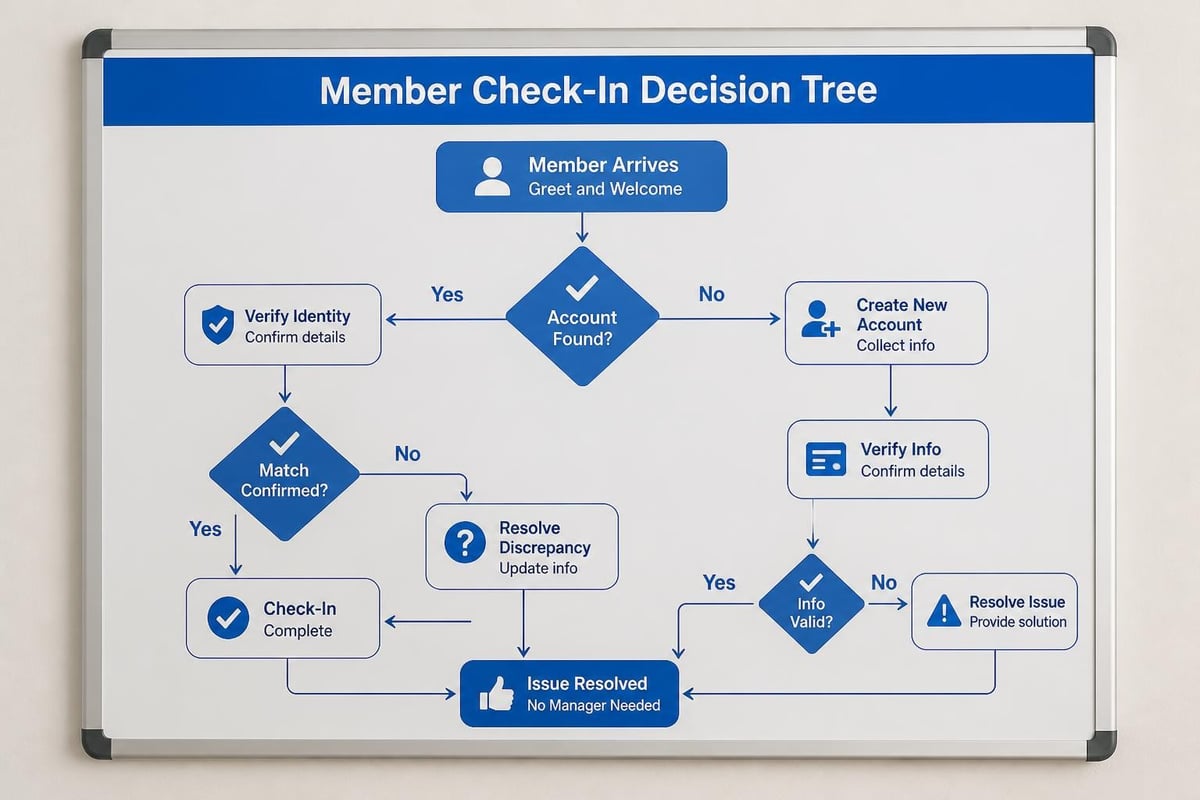
Creating Decision Trees, Not Policies
Staff don't need to memorize your entire policy manual. They need decision trees that guide them through situations. "If the system shows an expired membership, ask if they'd like to renew today. If yes, direct them to the membership desk. If no, explain they cannot access the facility."
Simple, clear, and leaves no room for improvisation that creates inconsistent member experiences.
Measuring Whether Your System Actually Works
How do you know if your check out and check in process is effective? Track these metrics monthly during season:
| Metric | Good Target | Warning Signs |
|---|---|---|
| Average check-in time | Under 15 seconds | Over 30 seconds |
| Staff escalations per 100 check-ins | Fewer than 5 | More than 10 |
| Uncollected guest fees | Less than 2% | More than 5% |
| Capacity tracking accuracy | Within 5% of actual | More than 10% variance |
| Member complaints about check-in | Fewer than 2 per month | Weekly complaints |
These numbers tell you whether your system handles real-world volume or creates friction. One club administrator discovered they were losing over $2,000 per season in guest fees simply because their manual check-in process made it easy for charges to slip through during busy periods.
The Questions Your Board Will Ask
Eventually, someone on your board will question whether you need technology for something as simple as check-in. Here's how to make your case with data they understand:
Staff efficiency: Show how many staff hours you save per season with automated check out and check in versus manual processes.
Revenue protection: Calculate uncollected guest fees and other charges from your current system versus automated tracking.
Liability reduction: Explain the legal exposure of not having accurate facility occupancy records during an incident.
Member satisfaction: Present complaint trends and wait time data showing how check-in friction affects the member experience.
Most board members understand these factors once you translate technology benefits into operational outcomes they care about.
Common Mistakes Even Good Clubs Make
You can invest in great technology and still create check-in problems through poor implementation. Watch for these issues:
Over-Complicating Guest Policies
Some clubs create Byzantine guest rules that are theoretically fair but practically impossible to enforce. "Members get six guest passes per season, but no more than two at once, except during special events when it's four, unless you've already used three passes that month."
Your check out and check in system can track complex rules, but that doesn't mean you should create them. Simple, consistent policies are easier to enforce, easier for members to understand, and create fewer front desk conflicts.
Ignoring the Mobile-First Reality
Members expect to handle routine tasks through their phones. If your check-in process requires them to carry a physical card they'll inevitably forget, you create unnecessary friction. Modern swim club management software offers mobile options that work alongside traditional methods.
Treating Technology as the Whole Solution
Software improves check out and check in efficiency, but it doesn't replace good training, clear policies, or attentive staff. Technology amplifies what you're already doing. If your underlying processes are chaotic, automation just creates faster chaos.
The clubs that succeed combine technology with operational discipline. They use software to handle routine verification and tracking, freeing staff to focus on judgment calls and member service that actually require human attention.
Peak Season Stress Testing
Your check out and check in system needs to handle your absolute worst-case scenario, not your average Tuesday afternoon. Here's how to stress test before season opens:
The Memorial Day Simulation
Pick a Saturday in early season and challenge your system:
- Volume test: Can you process 150+ check-ins between noon and 2 PM without creating lines?
- Staff test: Put your newest employee on the desk during peak hours. Can they handle it?
- Problem test: Throw edge cases at your system (expired members, payment disputes, capacity limits). Does it handle them gracefully?
- Failure test: What happens if your internet goes down? Do you have offline fallback procedures?
The clubs that avoid summer chaos run these tests in May, not after they've already experienced front desk meltdowns over July 4th weekend.
Weather-Related Capacity Swings
One unique challenge for outdoor facilities: weather creates wild attendance swings. The first hot weekend of summer might bring 3x your normal attendance, all arriving within a two-hour window.
Your check out and check in process needs to scale rapidly without requiring additional staff. Automated systems handle volume spikes better than manual processes, but you still need enough entry points (kiosks, mobile check-in, etc.) to distribute the load.
Special Situations Worth Planning For
Beyond routine operations, specific scenarios require additional check-in considerations:
Events and Competitions
Hosting a swim meet or special event changes everything about check out and check in. You're managing competitors, spectators, coaches, officials, and vendors alongside regular members. Your standard process doesn't work.
Smart clubs create event-specific protocols that run parallel to normal operations. This might mean temporary badges, designated entry points, or separate check-in stations. The key is planning these exceptions before event day.
Multi-Facility Access
Some organizations manage multiple pools, tennis courts, or other amenities across different locations. Members expect their credentials to work everywhere, which requires check out and check in systems that share data across facilities.
This level of complexity needs purpose-built multi-community amenity management capabilities rather than duct-taped solutions.
Emergency Situations
The most critical check-in data you'll ever need is the list of everyone on-site during an emergency. Weather evacuations, injury responses, or security situations all require knowing exactly who's present.
Your system should produce this report instantly, not after thirty minutes of counting and cross-referencing. This isn't about efficiency anymore; it's about safety and liability protection.
Making the Switch Without Disrupting Operations
You can't just flip a switch from manual to automated check out and check in on opening day. The transition requires planning that most clubs underestimate.
The Parallel Operation Period
Plan to run old and new systems simultaneously for at least two weeks. This gives you fallback options when technology hiccups occur and gives members time to adjust to new procedures.
During this period:
- Staff checks people in using both methods
- You compare data accuracy between systems
- You identify and fix integration issues
- Members learn new procedures with low stakes
Yes, this temporarily doubles workload. But it prevents the chaos of switching cold turkey and discovering problems when you're already overwhelmed with season opening demands.
Member Communication That Actually Works
Send three emails explaining your new check-in process, and most members will ignore all three. Instead, create visual guides at the front desk, have staff explain during the first check-in, and provide simple quick-start cards members can take home.
Focus on what changes for them specifically: "Use your member card instead of signing in" or "Download the app and tap 'Check In' when you arrive." Skip the technical details about backend systems or data integration. They don't care and it doesn't help them.
Measuring Adoption Success
Track what percentage of members successfully use new check out and check in methods without staff assistance. Your goal is 80%+ adoption within the first month. If you're not hitting that, your communication or interface needs work.
The Real ROI of Better Check-In
Let's talk money, because eventually someone will ask whether modernizing check out and check in justifies the cost.
Direct savings:
- Reduced staff hours during peak times (fewer entry stations needed when automated)
- Recovered guest fees and charges that previously slipped through
- Eliminated printed sign-in sheets and supplies
- Reduced payment processing costs through integrated systems
Indirect benefits:
- Fewer member complaints about wait times or inconsistent enforcement
- Better data for capacity planning and resource allocation
- Improved liability documentation if incidents occur
- Enhanced member experience leading to higher retention
One mid-sized club calculated they saved $8,000 annually in staff costs alone by reducing average check-in time from two minutes to twenty seconds. Add recovered guest fees and the system paid for itself in the first season.
What About Small Clubs?
You might think efficient check out and check in systems only make sense for large facilities. Actually, small clubs often benefit more because they can't afford mistakes or inefficiency.
When you only have one or two staff members on duty, they can't spend their entire shift processing check-ins. They need systems that automate routine verification so they can handle everything else required to run the facility.
Modern swim club software offers scalable pricing that works for clubs of any size, precisely because the efficiency benefits matter most to smaller operations.
Long-Term System Evolution
Your check out and check in needs will change over time. Member expectations shift, facility amenities expand, and new technologies emerge. Build flexibility into your systems from the start.
Data You'll Eventually Want
Even if you don't need detailed usage analytics today, you'll want historical data later when making strategic decisions. Which days see the highest attendance? What times are least utilized? How do usage patterns change year over year?
Systems that capture this data passively through normal check out and check in operations give you insights for future planning without additional work.
Integration With Future Capabilities
The check-in system you implement in 2026 should easily integrate with capabilities you'll add in 2027 or 2028. Mobile app expansion, additional amenities, digital waiver systems, or reservation management all connect to your core check-in infrastructure.
This is why choosing swim club management software built on modern, flexible platforms matters more than finding the cheapest point solution for today's immediate needs.
Better check out and check in processes save time, reduce errors, and create happier members. The clubs that modernize these basics gain efficiency that compounds across every other operation. PoolPulse provides integrated check-in capabilities designed specifically for swim clubs, tennis clubs, and HOA facilities, connecting member management, billing, and access control in a single platform that actually works during your busiest weekends.

The Monthly Billing Chaos Test for Swim Clubs
Running monthly billing at your swim club shouldn't feel like chaos. Take this test to find billing mistakes before they cost you time and money.

The True Cost of Messy Billing: What Your Club Loses
Manual billing costs more than you think. Learn how swim clubs lose revenue, waste staff time, and frustrate members with outdated systems.

Guest Check-In Without the Saturday Morning Chaos
Learn how to check in guest visitors at your swim club without slowing down member access or creating bottlenecks during peak hours.
Want to see if PoolPulse is a good fit for your club?
Book a walkthrough and we'll show you exactly how PoolPulse can help based on your club's needs, goals, and current processes.