

Guest Check-In Without the Saturday Morning Chaos
Learn how to check in guest visitors at your swim club without slowing down member access or creating bottlenecks during peak hours.


It's 9:45 on a Saturday morning in July. Your lane lines are already full. Three families are waiting at the front desk, and two of them brought guests. Your front desk volunteer is flipping through clipboards trying to find the right form while members tap their cards and wonder why the line isn't moving. Someone's guest doesn't have ID. Another member insists their guest limit resets today, but you can't verify that without checking their account history. This is the moment when a simple task becomes a headache that sets the tone for everyone's day.
The way you check in guest visitors affects everything from member satisfaction to liability coverage to revenue tracking. Yet most swim clubs treat guest check-in as an afterthought until it becomes a problem. Let me walk you through what actually works when you need to process guests quickly, keep accurate records, and maintain the security your members expect.
Why Guest Check-In Creates Front Desk Bottlenecks
When you check in guest visitors, you're doing more than just opening the gate. You're verifying member standing, confirming guest limits, collecting fees, recording names for liability purposes, and often explaining rules to people who've never been to your facility before. That's a lot to handle when there's a line forming behind them.
The typical process breaks down like this:
- Member arrives with guests and approaches desk
- Staff looks up member account to verify active status
- Staff checks how many guest passes member has used
- Each guest fills out waiver or liability form
- Staff collects guest fees (if applicable)
- Staff records guest names in daily log
- Staff issues guest badges or wristbands
- Member and guests proceed to facility
Each step takes time. Multiply that by ten families on a busy Saturday, and you've created a bottleneck that frustrates everyone. Much like how streamlining hotel check-in process improves guest satisfaction in hospitality settings, swim clubs benefit from removing friction at the entry point.
The Hidden Costs You're Probably Missing
Most clubs focus on the obvious problem which is wait times. But inefficient guest check-in costs you in ways that don't show up until later. When staff can't quickly verify guest limits, members exploit the system. When you don't capture guest information properly, your liability coverage has gaps. When guest fees aren't tracked accurately, you're leaving revenue on the table.
I've seen clubs discover they were short thousands of dollars in guest fees simply because busy front desk staff waved people through rather than process them properly. The math adds up fast when you're charging $10 per guest and you're missing 20-30 guests per week during peak season.

The Real Requirements for Check In Guest Processing
You can't fix guest check-in without understanding what you actually need to accomplish. Most clubs make the mistake of focusing on speed alone, then wonder why they have compliance problems or revenue leaks. The goal isn't just fast processing. It's accurate processing that protects your club while keeping things moving.
What Information You Actually Need
Every time you check in guest visitors, you need to capture specific data points. Some are for safety and liability. Others are for compliance with your rules and local regulations. Here's what matters:
Required Information:
- Guest full name
- Member who sponsored the guest
- Date and time of visit
- Guest acknowledgment of rules/liability
- Payment confirmation (if fees apply)
Nice-to-Have Information:
- Guest contact information
- Relationship to member
- Previous visit history
- Special notes or restrictions
The challenge is collecting this information without creating paperwork that slows everything down. Traditional methods like guest check-in forms work but they're slow and the data lives on paper instead of in your system where you can actually use it.
Member Rules That Complicate Everything
Your guest policies create most of the complexity at check-in. Different membership types have different guest privileges. Some members get unlimited guests. Others get two per visit or ten per season. Family memberships might allow teen members to bring friends while individual memberships don't.
Here's a comparison of common guest policy structures:
| Membership Type | Guest Limit | Fee Structure | Verification Needed |
|---|---|---|---|
| Individual | 2 per visit, 10 per year | $10 per guest | Current visit count + annual total |
| Family | 4 per visit, unlimited annual | $8 per guest | Current visit count only |
| Premium | Unlimited | Included | Active membership status |
| Social | No guest privileges | N/A | None |
When your front desk needs to remember all these rules and apply them correctly under pressure, mistakes happen. Members show up expecting privileges they don't have. Staff makes exceptions they shouldn't. The rules become suggestions instead of policies.
Building a Guest Check-In System That Actually Works
The difference between chaos and smooth operations isn't more staff or stricter rules. It's having a system that makes the right thing the easy thing. When staff can check in guest visitors with a few clicks instead of juggling clipboards and calculators, your whole entry process speeds up.
The Core Components You Need
A functional guest check-in system needs three pieces working together. First, immediate access to member account information so staff can verify standing and check guest limits in real-time. Second, a simple way to capture guest information and liability acknowledgment. Third, automatic tracking of guest counts and fees so nothing falls through the cracks.
Modern swim club management platforms like those available through PoolPulse features handle all three pieces in one interface. When a member swipes in, the system shows their guest allowance. Staff can add guests right there, collect digital waivers, process fees, and update counts automatically. No paperwork, no math, no wondering if you're within policy.
Digital Waivers vs. Paper Forms
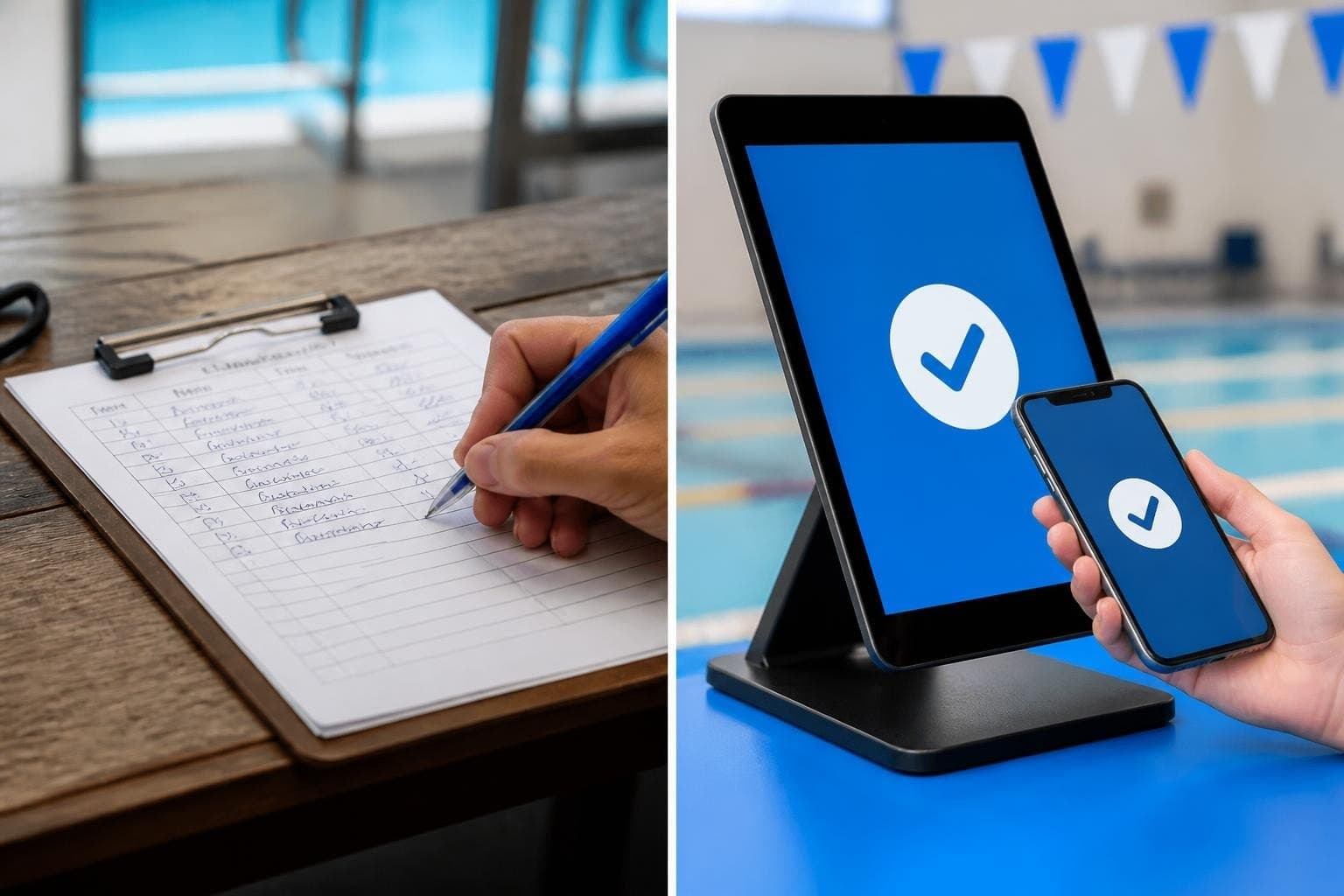
Paper liability waivers seem simple until you try to find one later. A member's guest gets injured in August. Your insurance company wants to see the signed waiver. Good luck finding one piece of paper in a stack of hundreds. Even if you find it, can you read the handwriting?
Digital waivers solve this problem completely. Guests enter their information on a tablet or phone. The data is typed, not handwritten. It's stored with the member's account and the specific visit date. You can pull it up in seconds if you need it.
Benefits of digital guest waivers:
- Searchable by guest name, member name, or date
- Stored indefinitely with no filing cabinets
- Include timestamped acceptance of terms
- Can require specific acknowledgments for minors
- Integrate directly with member records
The technology sounds fancy, but from a staff perspective, it's just handing someone a tablet instead of a clipboard. The difference is what happens afterward.
Handling Special Situations Without Slowing Down
Standard guest check-in is straightforward once you have a system. The problems come from edge cases. The member who swears they should have guest passes left. The family that brings six kids when their limit is four. The guest who refuses to provide ID or sign a waiver. You need clear protocols for these situations.
When Members Dispute Their Guest Count
This happens weekly at most clubs. A member insists they haven't used their guest passes yet, but your records show otherwise. Without a system that tracks individual guest visits by date and name, you're stuck in a he-said-she-said situation. With proper tracking, you can show the member exactly when they brought guests and who those guests were.
I worked with one club that tracked this in a spreadsheet. Staff had to search through tabs and do mental math to figure out current counts. Members won arguments by default because staff couldn't prove anything quickly enough. After switching to automated tracking through their swim club management software , disputes dropped by 80% because the data was right there on screen.

Handling Group Events and Guest Surges
Your regular check-in process works fine for normal days. Then someone hosts a birthday party or graduation celebration and shows up with fifteen guests. Your standard process isn't built for this volume. You need a fast way to check in guest groups without holding up everyone else.
Options for group guest processing:
- Pre-registration: Member submits guest list in advance through member portal
- Bulk check-in: Staff processes entire group at once with single waiver
- Designated entry time: Groups arrive before or after peak hours
- Special event packages: Different rules and fees for organized gatherings
The best approach depends on how frequently you deal with groups and whether you want to encourage or discourage large guest parties. Some clubs charge premium rates for groups over a certain size. Others require advance approval from management. The key is having a defined process instead of making it up each time.
Guest Limit Resets and Tracking Periods
Most clubs reset guest limits on some schedule. Monthly limits reset on the first. Annual limits reset on membership anniversary dates. Seasonal limits reset when you reopen. Tracking these resets manually creates endless confusion.
When you automate guest tracking, the system handles resets automatically. The member doesn't need to ask when their limits refresh. Staff doesn't need to calculate anything. The current available count displays every time the member checks in. This eliminates probably half the questions your front desk gets about guest policies.
Technology That Simplifies Instead of Complicates
You might be thinking this all sounds great but too technical for your club. That's the wrong way to look at it. The question isn't whether to use technology. You're already using technology, even if it's just a spreadsheet. The question is whether your technology makes work easier or harder.
What Modern Check-In Actually Looks Like
Picture this instead of your current process. Member walks up and taps their membership card or enters their phone number. The screen shows their name, photo, membership status, and guest count in big friendly numbers. Staff taps "Add Guest," the guest types their name on a tablet and taps "I agree to terms," and they're done. Total time: 30 seconds. Total paperwork: zero.
This isn't science fiction. This is how basic guest check-in works with modern facility management software. The same approach used in contactless hotel check-in best practices translates directly to recreational facilities. The only difference is you're typically checking in guests as additions to member accounts rather than standalone reservations.
Integration With Membership Data
The power of digital guest check-in comes from integration. When guest visits connect directly to member accounts, you can analyze patterns. You can see which members use guest privileges most. You can identify if certain membership types rarely bring guests and adjust pricing accordingly. You can spot potential abuse before it becomes a problem.
A comprehensive platform like PoolPulse connects guest tracking with billing, communications, and reporting in one system. When a member exceeds their guest limit, the system can automatically charge overage fees. When guest counts spike on certain days, you can schedule more staff. When a member dispute happens, you have complete visit history instantly available.
Training Staff to Check In Guest Efficiently
Even the best system fails if staff doesn't use it properly. Your front desk team needs clear protocols, hands-on practice, and authority to handle common situations without calling a manager. Most training gaps happen because clubs focus on the happy path and ignore the messy reality of busy mornings.
The Essential Staff Training Checklist
When you onboard new front desk staff or volunteers, they need to know more than just the button sequence. They need to understand the why behind guest policies and how to handle pushback professionally.
Critical training elements:
- How to look up member accounts quickly
- Where to find current guest counts and limits
- Proper waiver completion process
- Fee collection and payment processing
- When to require manager approval
- How to handle disputes calmly
- Emergency procedures if system is down
That last point is crucial. Your digital system will eventually have an outage or internet connectivity issue. Staff needs a backup process that captures essential information on paper so you can enter it later. This isn't a reason to avoid digital systems. It's just good planning.
Creating Quick Reference Guides
Your staff doesn't need to memorize every membership type and guest policy. They need a simple chart they can glance at while helping members. One club I worked with created a laminated reference card that showed guest limits, fees, and special rules for each membership category. Staff kept it right at the desk and it eliminated most policy questions.
The same information should be available in your management system interface. When staff looks up a member, they should see that member's specific guest allowance without needing to remember which category allows what. The system should do the remembering.
Measuring What Matters for Guest Check-In
You can't improve what you don't measure. Most clubs have no idea how long guest check-in actually takes or how much revenue they collect from guest fees. They just know it feels chaotic during busy times. Start tracking some basic metrics and you'll spot improvement opportunities immediately.
Key Performance Indicators Worth Tracking
These numbers tell you how well your guest check-in process really works:
| Metric | What It Shows | Target Range |
|---|---|---|
| Average check-in time per guest | Process efficiency | 30-60 seconds |
| Guest fees collected vs. guest count | Revenue capture rate | 95%+ match |
| Member disputes per month | Policy clarity and system accuracy | Under 5 |
| Peak hour wait times | Staffing adequacy | Under 3 minutes |
| Missing waiver percentage | Compliance gaps | 0% |
You'll notice these metrics focus on outcomes, not just speed. Fast check-in doesn't help if you're not collecting fees or capturing liability waivers properly. The goal is fast and accurate.
Seasonal Patterns and Planning
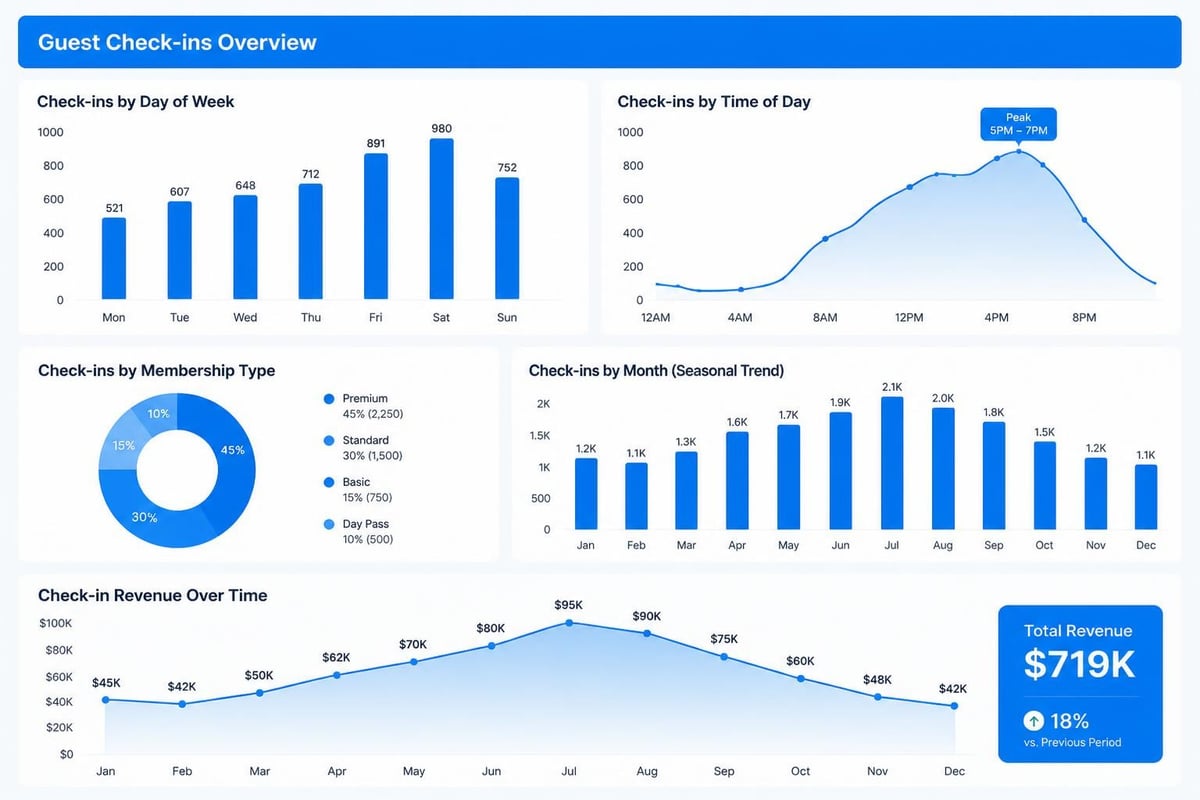
Guest traffic follows predictable patterns at most clubs. Summer weekends are slammed. Weekday afternoons are quiet. School breaks bring surges. If you track guest check-ins by date and time, you can staff appropriately and avoid the situation where one person is handling fifteen guest transactions while a line forms.
Your management software should make this analysis automatic. Looking at historical data through a platform like what PoolPulse offers helps you spot patterns you'd miss otherwise. Maybe Saturday mornings from 10-11 AM are consistently your busiest guest arrival window. Schedule your most experienced staff then and consider opening a second check-in station.
Common Mistakes That Make Guest Check-In Harder
After helping dozens of clubs improve their check-in process, I've seen the same mistakes repeated everywhere. The good news is they're all fixable once you recognize them. The bad news is they're often invisible until someone points them out.
Inconsistent Policy Enforcement
This is the biggest problem. Some staff members enforce guest limits strictly. Others let things slide. Members learn which staff to approach when they want exceptions. Pretty soon your policies mean nothing because everyone knows you don't really enforce them.
Consistency requires two things. First, your system needs to make the policy obvious and automatic. If someone is over their limit, the system should flag it immediately. Second, your staff needs authority to enforce policies without fear of member complaints. That means management backing up front desk decisions, not overruling them to avoid conflict.
Treating Guest Check-In as an Interruption
Some clubs set up their front desk like guest check-in is an occasional exception rather than a daily occurrence. The guest forms are in a drawer. The fee collection process is different from regular transactions. Staff treats checking in guest visitors like a special procedure that disrupts the normal flow.
Flip that mindset. Guest check-in is normal flow. Build it into your standard check-in process so it's just another branch in the same workflow. Member checking in alone? Quick tap and go. Member checking in with guests? A few extra taps to add names and collect fees. Same basic process, not a completely different procedure.
Ignoring Mobile and Self-Service Options
Your members have smartphones. Your guests have smartphones. Yet most clubs still require everyone to interact with front desk staff for every transaction. This creates unnecessary bottlenecks when the technology exists to let members handle routine tasks themselves.
Some facilities now let members pre-register guests through a mobile app or member portal. The member enters guest names and acknowledges policies from home. When they arrive, guest check-in is just a confirmation tap. Staff time drops dramatically and the line moves faster. The approach mirrors how Airbnb check-in and check-out procedures have evolved to reduce friction through advance communication and digital tools.
Revenue Impact of Better Guest Management
Here's something most clubs don't think about: guest check-in directly affects your bottom line. When you track guests accurately, you collect all the fees you're owed. When you make guest visits easy for members, they bring guests more often and you collect more fees. When you can analyze guest patterns, you can adjust policies to optimize revenue without frustrating members.
Finding Missing Revenue
Run this test at your club. Count how many guests visited last month based on your front desk logs. Then count how many guest fees you collected. If those numbers don't match closely, you're losing money. Either staff is waving fees because the collection process is awkward, or guests are slipping through without being recorded at all.
One club I consulted with discovered they were missing about 30% of potential guest fee revenue. They charged $8 per guest and averaged 200 guest visits per month during summer. That's $480 in missing revenue monthly, or nearly $6,000 over the summer season. Fixing their tracking and collection process paid for their software upgrade in the first year.
Dynamic Pricing and Guest Packages
Once you have good data on guest traffic, you can get strategic about pricing. Maybe you offer discounted guest rates on weekday afternoons when you have capacity. Maybe you create guest punch cards that members can buy in advance. Maybe you tier pricing so the first two guests are one price and additional guests cost more.
None of this is possible without accurate tracking. You need to know current usage patterns before you can optimize them. The visibility that comes from integrated guest management through systems like PoolPulse's platform enables these revenue opportunities.
Member Communication Around Guest Policies
Even the smoothest check-in process creates friction if members don't understand your guest policies. You need clear communication before members arrive with guests, not a surprise conversation at the front desk when they're already in their swimsuits.
Making Policies Visible and Clear
Your guest policies should be prominent in multiple places. On your website. In your member handbook. On signs at entry. In your member portal account summary. The more often members see their guest allowance, the less often they'll be surprised when you enforce limits.
Consider adding guest count to member communications. When you send monthly newsletters or facility updates, include a line showing each member their current guest usage. "You've used 4 of your 10 annual guest passes." This keeps the information top of mind and prevents the situation where someone shows up assuming they have passes available when they've already used them all.
Handling the "I Didn't Know" Excuse
Members will claim ignorance of policies even when you've communicated them clearly. This puts front desk staff in an awkward position. Do you enforce the policy and anger the member? Do you make an exception and undermine your rules?
The answer is documentation. When every member has digitally acknowledged your guest policies during signup or renewal, you have proof they knew the rules. Your staff can politely reference that acknowledgment. "I understand this is frustrating. The guest policy is part of the membership terms you agreed to when you renewed in April. I can show you that on screen if it helps."
This isn't about being rigid. It's about being fair to everyone. The members who follow policies shouldn't subsidize those who ignore them.
Preparing for Regulatory and Safety Requirements
Guest check-in isn't just about operations. It's about safety and legal compliance. If someone gets hurt at your facility, you need proof they acknowledged your liability waiver. If health officials ask for contact information during a disease outbreak, you need accurate records of who was on site. If your insurance company audits your practices, you need documentation that you track guests properly.
Liability Waivers That Actually Protect You
A waiver only protects your club if it's properly executed. That means the person who signed it was informed of risks, signed voluntarily, and the signature is documented and retrievable. Paper waivers filed in boxes don't meet that standard if you can't find them when you need them.
Digital waivers create an audit trail. You know exactly when the waiver was signed, what version was presented, and what terms the guest acknowledged. If a lawsuit emerges months or years later, you can produce that specific waiver with timestamps and IP address logs if needed. The legal value is significantly higher than a signature on a paper form in storage somewhere.
Contact Tracing and Health Compliance
The last few years taught facility operators that you might need to contact everyone who visited on a certain date. If a guest tests positive for a communicable disease and health officials want to notify other visitors, you need accurate guest records with contact information.
Most clubs I work with couldn't have done this in 2019. Their guest logs had first names and illegible handwriting. No phone numbers, no emails, no way to reach anyone. Now this capability is standard practice. Every guest record should include at minimum a phone number or email so you can reach out if necessary.
Making the Switch to Better Guest Check-In
You've probably identified several ways your current process could improve. The question now is how to actually make changes without disrupting daily operations or frustrating your staff and members. Change management matters as much as the new process itself.
Starting With a Pilot Period
Don't flip a switch and announce everything is different tomorrow. Start with a test phase. Maybe you implement digital guest check-in on weekday afternoons when traffic is lighter. Work out the kinks. Train staff gradually. Get feedback from members who encounter the new process. Refine based on what you learn.
After a few weeks of testing, expand to busier times. By the time you're using the new process during Saturday morning rushes, your staff has done it dozens of times and feels confident. Members have seen it work and aren't surprised. The transition feels gradual instead of jarring.
Getting Member Buy-In
Some members will resist any change, especially if they benefited from the old system's inefficiencies. Maybe they were getting away with extra guests because staff couldn't track limits properly. Now that's ending and they're not happy about it.
Address this head-on. Communicate that the changes make things fairer for everyone. The members who follow the rules will see shorter wait times and better service. The club will be able to offer more amenities because you're capturing revenue you were missing. Frame it as improvement, not enforcement.
Training and Supporting Your Team
Your front desk staff needs more than a tutorial on the new system. They need confidence that management will support them when members push back. They need troubleshooting resources when something doesn't work as expected. They need encouragement as they adapt to new workflows.
Consider creating a transition support channel where staff can ask questions and share experiences. Maybe it's a group text or a Slack channel or just a designated person they can call. When someone encounters a situation they haven't seen before, they need help immediately, not at next week's staff meeting.
The implementation resources available through PoolPulse onboarding can make this transition much smoother by providing structured training and ongoing support specifically designed for swim clubs.
Guest Check-In as Member Experience
Everything I've covered affects your member experience. When members can check in guest visitors quickly and easily, they're more likely to bring guests. When policies are clear and consistently enforced, members feel the system is fair. When staff has the tools to handle check-in efficiently, interactions are friendly instead of stressed.
Think of guest check-in as a test of your overall operations. If this simple transaction is complicated and frustrating, what does that say about your club management? If you can't track basic guest visits accurately, how well are you tracking anything else?
The clubs that get this right treat guest check-in as an opportunity to demonstrate professionalism and attention to detail. Every interaction at the front desk shapes member perception. Make those interactions smooth, and members notice. Make them chaotic, and members notice that too.
The Compound Effect of Small Improvements
Shaving 30 seconds off each guest check-in transaction doesn't sound dramatic. But multiply that by ten guests during a busy hour, and you've saved five minutes of line time. Multiply it by hundreds of guests over a summer season, and you've saved hours of staff time that can go toward other member services.
Small efficiency gains compound into significant improvements in operations and member satisfaction. That's why it's worth investing time and resources into getting check-in right, even though it seems like such a basic function.
The way you check in guest visitors reveals everything about how your club operates. When you build systems that make routine tasks simple and accurate, you free up time and energy for what really matters: creating a great experience for your members and their guests. Modern swim club management software like PoolPulse brings together member data, guest tracking, digital waivers, and automated compliance into one platform designed specifically for facilities like yours. The result is less time managing paperwork and more time focused on running a facility your members love.

The Monthly Billing Chaos Test for Swim Clubs
Running monthly billing at your swim club shouldn't feel like chaos. Take this test to find billing mistakes before they cost you time and money.

The True Cost of Messy Billing: What Your Club Loses
Manual billing costs more than you think. Learn how swim clubs lose revenue, waste staff time, and frustrate members with outdated systems.
Does Your Check-In Process Really Protect Your Club?
Your front desk check-in might be costing you money and exposing liability. Learn how swim clubs use check out and check in systems that work.
Want to see if PoolPulse is a good fit for your club?
Book a walkthrough and we'll show you exactly how PoolPulse can help based on your club's needs, goals, and current processes.