

The Seven Signs You've Outgrown Your Club Operations
Your swim club is growing, but your tools aren't keeping up. These seven warning signs reveal when manual processes cost more than solutions.


It's 10 a.m. on a Saturday in June. Your front desk is three people deep. Parents are asking about balances, guests need day passes, and your seasonal staffer just radioed because the check-in tablet froze again. Meanwhile, your treasurer texted asking why last month's revenue report doesn't match the deposit slips. Sound familiar? You're not dealing with bad luck or a difficult weekend. You're seeing what happens when a growing club tries to run on tools that were never built to scale. Let's walk through the seven telltale signs that your current setup is holding you back and what a modern facilities management solution actually looks like in practice.
When Check-Ins Take Longer Than the Swim
You know something's wrong when members spend more time at the front desk than they do in the water. If your staff is flipping through binders, squinting at spreadsheets, or asking every family to confirm their address, you've hit a common breaking point.
Here's what slows check-ins down:
- Manual roster lookups in printed lists or static documents
- No quick way to verify active memberships or guest limits
- Confusion over which family members are covered under each plan
- Staff needing manager approval for simple questions
- No digital record of who entered and when
Every extra minute at check-in doesn't just frustrate members. It creates a line, adds stress to your front desk team, and makes Saturdays feel chaotic even when attendance is normal.
What Fast Check-Ins Actually Require
A proper facilities management solution turns check-ins into a two-second scan or search. Staff pull up a member, confirm status, and log entry. No hunting, no callbacks, no printed rosters that are outdated by Tuesday.
The difference isn't just speed. When your system knows who's active, who owes money, and who's allowed guests, your seasonal staff can handle 90% of questions without interrupting you. That's the shift from bottleneck to smooth operation.
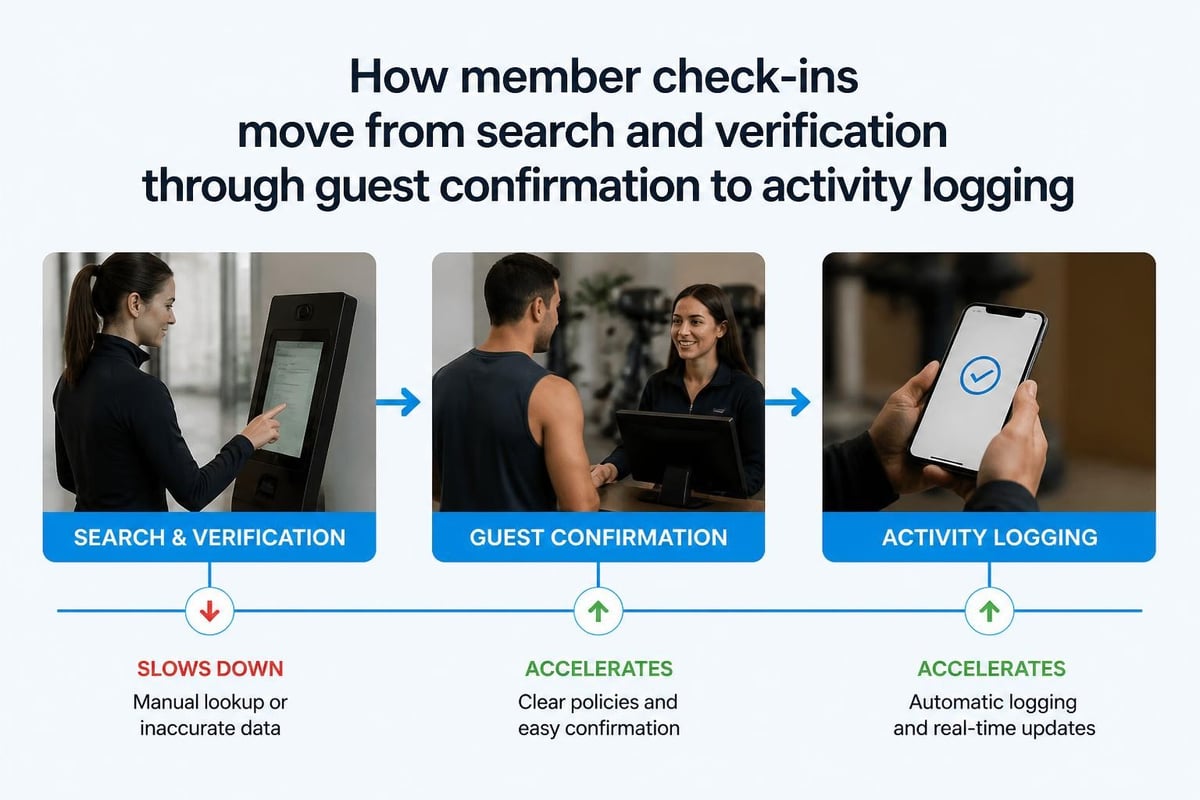
| Manual Process | Modern Solution | Time Saved Per Check-In |
|---|---|---|
| Search printed roster | Instant member lookup | 45-60 seconds |
| Verify payment status via spreadsheet | Live account balance display | 30-45 seconds |
| Call manager for guest policy | Automated guest limit enforcement | 60-90 seconds |
| Hand-write entry log | Automatic attendance tracking | 20-30 seconds |
When Billing Feels Like Archaeology
If preparing invoices means opening six different files, cross-referencing payment records, and wondering whether the Johnsons actually paid in March, your billing system is costing you real money. Not just in staff time. In lost revenue.
Missed renewals are the silent budget killer. According to IFMA's research and benchmarking reports , operational inefficiencies in member-driven facilities often stem from fragmented data systems that prevent timely billing and proactive revenue management.
Common billing mistakes that leak revenue:
- Renewals sent late because tracking is manual
- Partial payments recorded incorrectly
- Family plan changes not reflected in billing
- Guest fees missed or forgotten
- No automated reminders for overdue accounts
The Real Cost of Billing Delays
Every renewal that goes out a week late costs you a week of revenue. Multiply that across 200 families, and you're looking at real budget impact. A facilities management solution doesn't just send invoices faster. It tracks what's owed, what's paid, and what's about to renew, so nothing falls through the cracks.
Modern platforms like PoolPulse handle recurring billing automatically, flag accounts that need attention, and give you a real-time picture of your revenue without needing to reconcile three different spreadsheets. When your treasurer asks for numbers, you pull a report instead of spending two hours rebuilding data.
When Staff Training Takes All Season
You finally get your summer staff trained on how to process memberships, handle waivers, and look up guest policies. Then August arrives, they head back to school, and next May you're starting from scratch. If onboarding new staff feels like teaching a college course, your systems are too complicated.
Warning signs your processes are too complex:
- Training manuals that run 15+ pages
- New staff needing constant supervision for two weeks
- Different procedures for different membership types
- No consistent way to handle exceptions
- Managers spending more time answering questions than managing
The problem isn't your staff. It's that your patchwork of tools, workarounds, and "just remember to…" instructions creates unnecessary complexity. A good facilities management solution should be simple enough that a high school junior can run check-ins confidently after a 30-minute orientation.
Simplicity Saves More Than Time
When your platform handles the logic, staff just follow prompts. Is this member active? The system knows. Can they bring three guests? The system enforces it. Should we collect a day pass fee? The system calculates it. Your team focuses on being friendly and helpful instead of memorizing procedures.
This simplicity compounds. Less training time means lower labor costs. Fewer mistakes mean fewer member complaints. Confident staff means better member experience. It all starts with tools designed for real people, not just administrators.
When Reporting Means Starting Over
Your board asks a simple question: "How many new memberships did we add last quarter?" You think it'll take five minutes. An hour later, you're still combining data from your payment processor, your signup forms, and that Google Sheet where you track guest passes.
Questions that shouldn't be hard but are:
- What's our member retention rate year over year?
- Which membership types generate the most revenue?
- How many guests did we host each month?
- What percentage of members renewed on time?
- Are we hitting our budget targets?
If answering basic business questions requires detective work, you don't have a reporting problem. You have a data fragmentation problem. Your information lives in too many places, in too many formats, with no single source of truth.

| Question | Manual Method | Time Required | With Integrated System |
|---|---|---|---|
| Monthly revenue by category | Export three files, combine in Excel | 45-60 min | Run report |
| Member retention rate | Count renewals, compare to last year | 30-45 min | View dashboard |
| Average guest count per member | Hand-count guest logs | 60+ min | Filter report |
| Outstanding balance totals | Review all accounts individually | 45-60 min | Balance summary |
What Good Reporting Looks Like
A real facilities management solution doesn't just store data. It connects it. Member records link to payment history. Payments link to membership types. Attendance connects to account status. Everything feeds into dashboards and reports that answer your board's questions in minutes instead of hours.
The JLL Global State of Facilities Management Report highlights that successful facilities are increasingly relying on integrated platforms that provide real-time operational visibility, allowing managers to shift from reactive firefighting to proactive strategy.
When Member Questions Go Unanswered
Members email asking about their balance. You check your payment records. They email asking when their renewal is due. You look it up manually. They call asking about guest policies. You explain the rules that aren't written down anywhere they can access. Every question becomes a task.
Now imagine if members could log into a portal and see:
- Their current account balance and payment history
- Upcoming renewal dates and amounts
- Available guest passes and usage limits
- Their membership details and coverage
- Recent check-in history
The hidden cost of answering basic questions:
You're not just spending time responding. You're interrupting other work, switching context, and creating delays. If 10 members email questions each day and each takes five minutes, that's 50 minutes of your day gone. Over a season, that's dozens of hours spent being a human search engine.
Self-Service Saves Everyone Time
When members can answer their own questions, two things happen. First, you get those hours back to focus on improvements, events, or actually managing the facility. Second, members get instant answers instead of waiting for your reply.
A proper member management platform puts information at members' fingertips. They check their balance before asking. They see their renewal date before missing it. They understand guest policies because the system displays them clearly. Less friction, happier members, more time for you.
When Technology Limits Instead of Helps
You added software to make things easier. Somehow, it made things harder. Your payment processor doesn't talk to your membership database. Your check-in app can't access account balances. Your website shows different information than your internal records. You're managing technology instead of using it.
According to the JLL State of Facilities Management Technology report , fragmentation is the number one complaint among facility managers. When systems don't integrate, staff waste time on double-entry, data doesn't sync, and errors multiply.
Signs your tech stack is working against you:
- Entering the same information in multiple places
- Manual exports and imports to keep systems aligned
- Different staff using different tools for the same task
- Features you're paying for but can't actually use
- More time managing software than managing members
Integration Isn't Optional Anymore
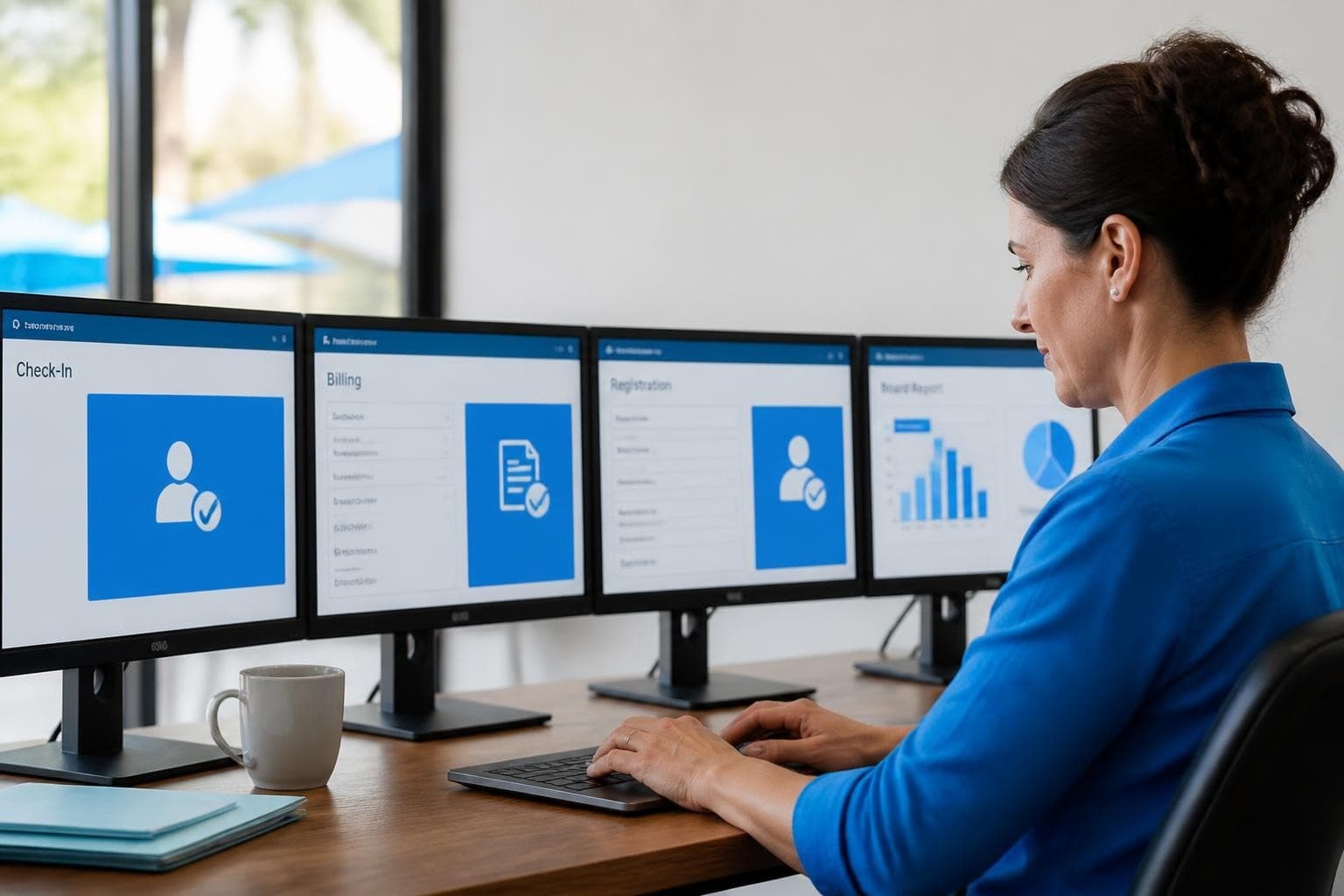
A true facilities management solution connects everything under one roof. Member data, billing, check-ins, renewals, reporting, and communication all flow through a single platform. When a member updates their email, it updates everywhere. When they make a payment, their balance adjusts instantly. When they check in, attendance logs automatically.
This isn't about fancy technology. It's about eliminating the busy work that comes from disconnected systems. Modern platforms like PoolPulse are built specifically for swim clubs, tennis clubs, and HOA facilities where integration isn't a luxury, it's a necessity for basic operational efficiency.
When Growth Creates Chaos Instead of Opportunity
You added 30 new families last year. Great news, right? Except now your waitlist tracking is a mess, your billing cycles are staggered unpredictably, and your front desk is overwhelmed more weekends than not. Growth exposed every limitation in your current approach.
What breaks first when you grow:
- Check-in lines get longer because lookups take time
- Billing errors increase because tracking gets complicated
- Staff questions multiply because procedures weren't scalable
- Member communication becomes inconsistent and scattered
- Financial reporting takes longer as data volume increases
A facilities management solution should make growth easier, not harder. When your systems scale with you, adding members means adding revenue without adding chaos. Your processes stay smooth whether you're managing 100 families or 500.
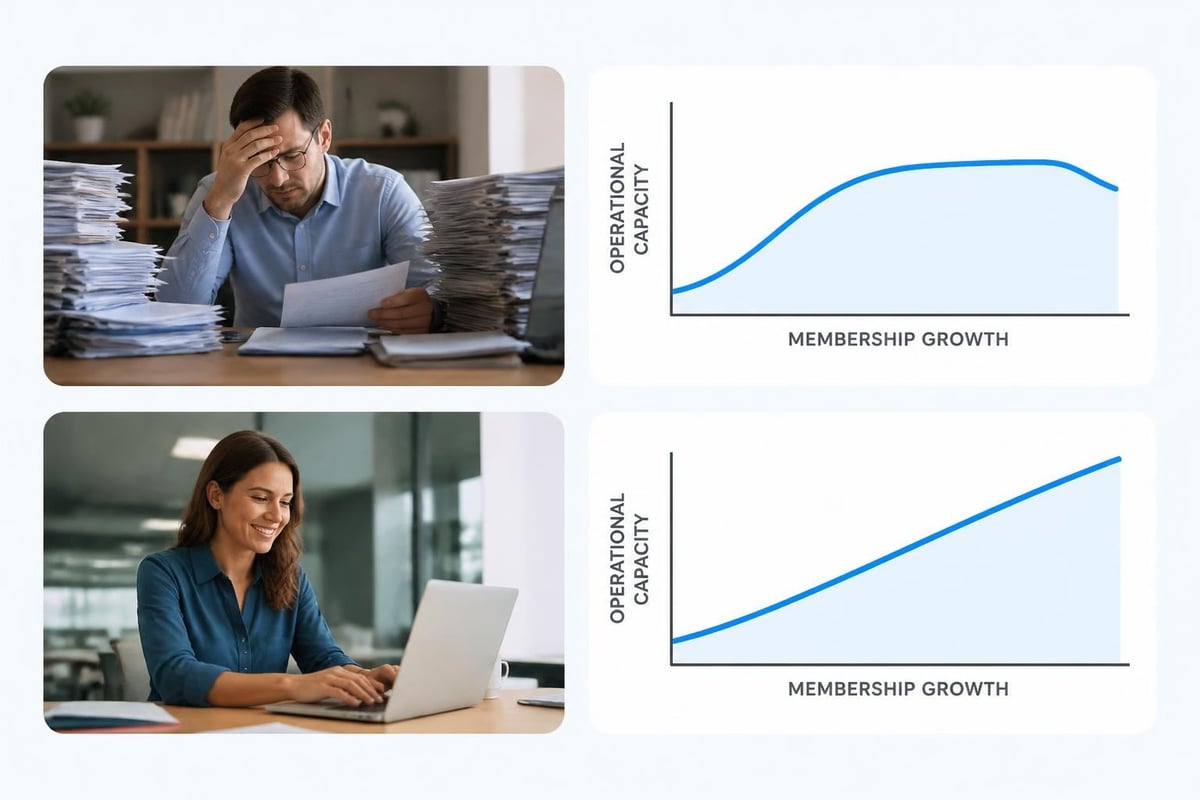
Built to Scale From Day One
The difference between software that helps and software that hinders comes down to design. Was it built for 50 members and jury-rigged to handle 300? Or was it designed from the start to handle facilities of any size with the same ease?
Look for platforms that handle complexity without creating it. Automated renewals that work the same for 10 members or 1,000. Reporting that stays fast as your data grows. Check-ins that take two seconds whether it's a quiet Tuesday or a packed Saturday. That's what scalability actually means in practice.
Organizations following guidance from the RICS Strategic FM Framework prioritize systems that align operational delivery with strategic growth, ensuring that facilities management capabilities support rather than constrain organizational objectives.
What "Facilities Management Solution" Really Means for Clubs
Let's clear up what we're actually talking about. When facility managers discuss a facilities management solution, they're not just talking about software. They're talking about a complete approach to running operations efficiently, maintaining compliance, tracking performance, and serving members well.
For swim clubs, tennis facilities, and HOA pools, that translates into:
- Member lifecycle management from signup through renewal
- Financial operations including billing, payments, and reporting
- Access control via digital check-ins and attendance tracking
- Communication tools for announcements, reminders, and updates
- Compliance tracking for waivers, certifications, and policies
- Operational reporting that shows what's working and what's not
Beyond Basic Club Software
The term "facilities management solution" might sound corporate, but the concept is simple. It's about having the right tools to manage your space, serve your members, and run your operation without everything depending on one person's knowledge or a stack of spreadsheets that might disappear if someone's laptop crashes.
The ISO 41001 standard for facility management systems emphasizes that effective FM systems integrate planning, delivery, and performance evaluation. While many swim clubs don't need ISO certification, the principle holds: your systems should create consistency, enable improvement, and support your mission rather than just documenting what already happened.
Choosing Technology That Fits Your Club
Not all facilities management solutions are created equal. Enterprise building management platforms designed for corporate real estate won't fit a 200-family swim club. Generic membership software might handle signups but miss the nuances of seasonal access, guest policies, or family accounts.
What to look for in club-specific solutions:
- Designed specifically for member-driven facilities, not adapted from other industries
- Configurable to match your policies without custom development
- Simple enough for seasonal staff to learn in one training session
- Transparent pricing that matches your budget and size
- Responsive support from people who understand clubs
The Configuration Question
Here's a critical distinction: Can the software adapt to how you operate, or do you have to change how you operate to fit the software? Swim clubs differ wildly in their policies. Some allow unlimited guests. Others restrict to two. Some bill annually. Others offer monthly options. Your facilities management solution should flex to match your rules, not force you into someone else's template.
PoolPulse's configurable platform was built specifically for this challenge. Whether you run a swim team with competitive programs, a social pool with seasonal access, or a tennis and swim club with multiple membership tiers, the system adjusts to your specific operational model without requiring workarounds or manual overrides.
The Hidden Costs of Waiting
Every week you operate with inefficient systems costs you in ways that don't show up on your budget line items. Staff frustration leads to turnover. Member annoyance leads to non-renewals. Billing delays lead to cash flow gaps. Small inefficiencies compound into real budget impact.
Consider what you're actually spending now:
| Hidden Cost Category | Annual Impact (200-member club) |
|---|---|
| Staff overtime for manual billing | $2,400 - $4,000 |
| Delayed renewals (late invoice cycles) | $5,000 - $8,000 |
| Billing errors and adjustments | $1,200 - $2,500 |
| Time spent on manual reporting | $1,800 - $3,200 |
| Member service delays (opportunity cost) | $3,000 - $6,000 |
These aren't theoretical numbers. They're the actual costs clubs discover when they track time spent on administrative tasks that should be automated. The Deloitte report on Smart Buildings and the Digital Workplace confirms that digital transformation in facility management typically shows ROI within the first year through reduced administrative overhead and improved revenue capture.
What Implementation Actually Looks Like
The idea of switching systems can feel overwhelming. What about your current data? How long will migration take? Will members notice disruptions? These are fair concerns, but modern platforms are designed for smooth transitions.
A good onboarding process includes:
- Data migration that brings your current member records, balances, and history into the new system
- Configuration that matches the platform to your specific policies and processes
- Training that gets your staff comfortable before launch
- Support that's available when questions come up
- Communication templates to inform members about improvements
Most clubs are fully operational on a new facilities management solution within two to four weeks. The key is choosing a platform built for migration, not one that assumes you're starting from scratch.
Making Your Case to the Board
You're convinced that upgrading to a real facilities management solution makes sense. Now you need to convince your board, trustees, or HOA leadership. They'll want to know the costs, the benefits, and why now instead of next year.
Frame your proposal around outcomes:
- Time savings: How many hours per week will staff save on billing, check-ins, and reporting?
- Revenue protection: How much are you losing to delayed renewals and billing errors?
- Member experience: What complaints or friction points will this solve?
- Scalability: What limitations does current growth expose?
- Risk reduction: What happens if your key administrator leaves and takes their knowledge with them?
Numbers Board Members Understand
Don't lead with features. Lead with impact. Show what 10 hours per week of administrative time savings is worth in salary costs. Calculate what a 5% improvement in on-time renewals means for cash flow. Demonstrate what operational visibility does for budget planning.
Resources like the make your case guide help you build a business case that connects technology investment to the outcomes your leadership cares about: financial health, member satisfaction, and operational resilience.
AI and Automation: Beyond the Buzzwords
You've probably heard about AI in facilities management. Some of it is marketing hype. Some of it is genuinely useful. The question is which capabilities actually matter for running a swim club or HOA pool.
Practical AI applications for clubs:
- Smart scheduling that predicts busy periods and suggests staffing
- Revenue insights that flag accounts likely to lapse
- Anomaly detection that catches billing errors before they compound
- Member communication that personalizes timing and content
- Operational reporting that highlights trends you'd miss manually
The key word is "practical." AI should make your job easier, not add complexity. When implemented well, you don't even notice it. You just notice that renewals go out at the optimal time, that reports surface the information you actually need, and that small problems get caught before becoming big ones.
Transparency Matters
As AI becomes more common in facilities management solutions, transparency becomes critical. You should understand what the AI is doing, how it's making decisions, and where human judgment still applies. Platforms with clear AI transparency policies help you use automation confidently without feeling like the system is a black box.
Real-World Scenarios: Before and After
Let's look at how a facilities management solution changes specific situations you deal with regularly.
Scenario One: Weekend Check-In Rush
Before: Staff flip through printed rosters, call you to verify guest limits, manually log entries in a notebook, and create a 15-minute line during peak arrival times.
After: Staff search member names on a tablet, instantly see account status and guest eligibility, check families in with one tap, and keep lines moving even when 50 members arrive within 30 minutes.
Scenario Two: Mid-Season Billing
Before: You spend three evenings building invoices in Excel, cross-reference partial payments manually, email invoices individually, then track who paid via a separate spreadsheet.
After: The system generates invoices automatically based on membership dates, applies payments instantly to correct accounts, sends invoices via email with payment links, and shows you a live dashboard of outstanding balances.
Scenario Three: Board Financial Review
Before: Your treasurer requests revenue reports. You export data from three systems, manually reconcile totals, build charts in Excel, and deliver a report that's outdated by the time the board meets.
After: You open the platform, select date ranges, generate a financial summary report, and email it to the board. The treasurer can log in and view real-time numbers anytime they have questions.
Scenario Four: New Staff Onboarding
Before: Training takes two weeks of shadowing, staff make frequent mistakes, you field constant questions, and confidence builds slowly as summer progresses.
After: A 45-minute orientation covers check-ins, guest policies, and basic troubleshooting. The system guides staff through each process. They're handling routine tasks independently within days instead of weeks.
The Integration Ecosystem
A facilities management solution doesn't exist in isolation. It needs to work with your website, your accounting software, your communication tools, and any other systems you depend on.
Common integrations clubs need:
- Website integration for online signups and renewals
- Payment processing for credit cards and ACH
- Email platforms for newsletters and announcements
- Calendar systems for events and reservations
- Accounting software for financial reconciliation
The best platforms make integration straightforward. Either through built-in connections or via standard protocols that your existing tools already support. When evaluating options, ask specifically about how the system connects to what you're already using.
If your club is running on WordPress or plugin-based systems , you'll want to understand what migration involves and whether your current customizations can transfer or if you'll need to rebuild certain workflows.
Security and Trust in Member Data
You're handling sensitive information: addresses, payment details, family structures, access patterns. Your facilities management solution needs to protect that data at least as well as your bank protects your checking account.
Security basics that aren't optional:
- Encrypted data transmission and storage
- Role-based access controls for staff
- Regular security audits and updates
- Compliance with data protection regulations
- Clear data retention and deletion policies
This isn't just about avoiding breaches. It's about trust. Members need confidence that their information is safe. Staff need assurance that the platform won't create liability. Your board needs documentation that you're meeting your fiduciary responsibilities.
Platforms with comprehensive trust centers and clear security overviews make it easy to verify that you're working with a partner who takes these responsibilities seriously.
When to Make the Change
There's never a perfect moment to switch systems, but there are better and worse times. The best window is typically during your slowest season, when you have time to learn new systems, migrate data carefully, and train staff before operations ramp up again.
Ideal timing for implementation:
- Late fall: After summer season ends, before renewal season begins
- Early winter: Quiet period for training and configuration
- Mid-winter: Launch with renewals as your first live process
- Early spring: Staff training before seasonal employees arrive
Times to avoid:
- Mid-summer when operations are at peak volume
- During major events or programs
- When you're short-staffed or dealing with other transitions
- Right before your fiscal year closes
That said, if your current systems are actively failing (not just inefficient, but breaking down), sometimes you need to make a change mid-season. In those cases, look for platforms with strong support and clear service level agreements that ensure you'll get help when you need it most.
Beyond Software: The Operational Mindset
Here's something important: A facilities management solution is a tool, not a magic wand. The best software in the world won't fix unclear policies, poor communication, or lack of member engagement. It will, however, amplify good practices and make excellent operations even better.
What technology can't do:
- Create policies you haven't defined
- Communicate information you haven't provided
- Solve interpersonal conflicts between staff or members
- Replace good judgment and member service skills
- Automatically make strategic decisions for you
What technology enables:
- Consistent execution of the policies you do create
- Reliable delivery of the information you want to share
- Clear documentation that reduces conflicts
- Staff confidence through structured processes
- Data-informed strategic decisions
Think of your facilities management solution as infrastructure. It creates the foundation for everything else you do. Better infrastructure doesn't automatically make you a better club, but it makes every other improvement easier to implement and sustain.
The Questions to Ask Before You Commit
When evaluating facilities management solutions, dig past the marketing materials. Ask specific questions about how the platform handles your exact scenarios.
Critical questions for any platform:
- How long does typical implementation take for a club our size?
- What happens to our data if we ever need to leave the platform?
- Can we customize membership types, billing cycles, and policies ourselves?
- What training and support is included versus what costs extra?
- How do you handle updates and feature releases?
- Who owns the customer relationship with our members?
- What's your uptime history and what happens during outages?
- Can we see the platform live, with our data, before committing?
Don't accept vague answers. If a vendor can't clearly explain how their platform handles family accounts with different access levels, or how partial payments get applied to specific line items, that's a red flag. The best platforms are built by people who actually understand how member-driven facilities operate.
Consider requesting a demo that walks through your specific use cases, not just a generic product tour. Better yet, ask about pilot programs that let you test the platform with real operations before rolling it out fully.
The Competitive Advantage of Operational Excellence
Here's what often gets missed in conversations about facilities management solutions: operational efficiency isn't just about saving money. It's about providing an experience that makes members want to stay and recommend you to others.
When your check-ins are smooth, your billing is accurate, your communication is timely, and your staff is confident and helpful, members notice. They might not think "wow, great software," but they do think "this place is well-run and respects my time."
The compounding benefits of operational excellence:
- Higher renewal rates because members value the experience
- Stronger word-of-mouth that fills waitlists naturally
- Less staff turnover because the job is manageable
- Better board confidence leading to investment in improvements
- More time for you to focus on programs and community building
According to BOMA International's operational standards , facilities that invest in management systems consistently outperform peers in both operational metrics and customer satisfaction. The same principle applies whether you're managing a 50-story office tower or a neighborhood swim club.
The seven warning signs we've covered aren't predictions of future problems. They're symptoms of current costs you're already paying in time, revenue, and member experience. Every hour spent on manual billing, every delayed renewal, every frustrated front desk interaction is telling you the same thing: your operation has outgrown its tools. The right facilities management solution brings everything together, from member check-ins and billing to reporting and renewals, into one platform that scales with you instead of limiting you. PoolPulse was built specifically for swim clubs, tennis facilities, and HOA pools that need modern, configurable software without the complexity of enterprise systems. If these scenarios sound familiar, it might be time to see what purpose-built club management looks like in practice.
The Swim Club Software Test Every Board Should Run
Run this simple test to see if your swim club software actually saves time or creates more work. Real scenarios, honest questions, better tools.

How to Answer Every Board Question in Under Two Minutes
Your swim club board asks tough questions. Learn how management reporting software helps you pull accurate answers in seconds, not hours.

The Saturday Morning Front Desk Test for Self Check Ins
Self check ins at your swim club save hours every Saturday and reduce errors. Test your setup, avoid common mistakes, and improve member flow.
Want to see if PoolPulse is a good fit for your club?
Book a walkthrough and we'll show you exactly how PoolPulse can help based on your club's needs, goals, and current processes.